8th Pay Commission: Central Employee Unions Seek Major Salary and Pension Overhaul in High-Level Meeting
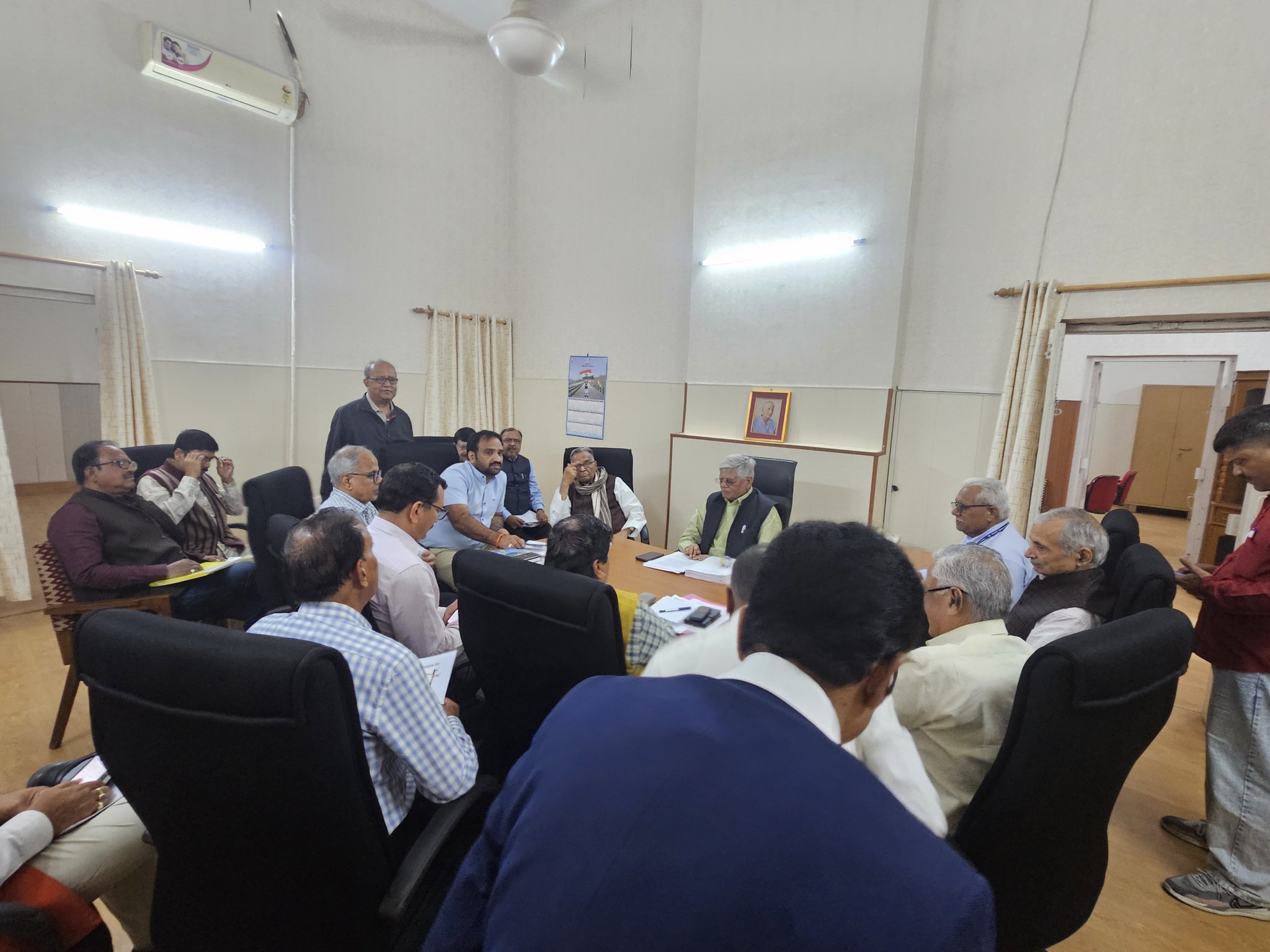
NEW DELHI – A significant milestone for over one crore central government employees and pensioners was reached on Wednesday, February 25, 2026, as the National Council (Staff Side) of the Joint Consultative Machinery (NC-JCM) convened a high-stakes drafting committee meeting in the capital.
The meeting, held at 13-C Ferozeshah Road, marks the beginning of a week-long deliberation to finalize a Common Memorandum for the 8th Central Pay Commission (CPC). Led by Convener Shiva Gopal Mishra, the committee is tasked with unifying the demands of various employee federations—including Railways, Defence, Post, and Income Tax—before submitting them to the Pay Commission Chairperson, Justice Ranjana Prakash Desai.
Key Demands on the Table
The primary focus of the meeting was to reach a consensus on a new pay structure that reflects the current economic reality and rising inflation.
1. The 66% Salary Hike: Redefining the ‘Family Unit’
One of the most revolutionary proposals discussed is the expansion of the “Family Unit” formula. Traditionally, the pay commission calculates minimum wages based on three units (employee, spouse, and two children). The NC-JCM is now pushing to increase this to five units to include dependent parents.+1
- The Impact: Mathematically, shifting from a 3-unit to a 5-unit base would increase the minimum basic salary calculation by approximately 66%.
2. Fitment Factor and Annual Increments
While the 7th Pay Commission used a fitment factor of 2.57, the unions are now advocating for a significantly higher multiplier:
- Proposed Fitment Factor: 3.0 to 3.25.
- Annual Increments: A demand to raise the annual increment from the current 3% to 7% to ensure meaningful financial progression over an employee’s career.
3. The “5 Promotions” Guarantee
To combat stagnation, particularly at junior levels, the Staff Side is demanding a time-scale-based promotion policy that guarantees at least five promotions for every employee during a 30-year service span.
Pension and Medical Welfare
The meeting strongly reiterated the long-standing demand to abolish the National Pension System (NPS) and the Unified Pension Scheme (UPS) in favor of restoring the Old Pension Scheme (OPS).
Other critical welfare demands include:
- CGHS Allowance: Increasing the Fixed Medical Allowance from ₹1,000 to ₹20,000 per month for employees residing in areas without CGHS-empanelled hospitals.
- Pension Parity: Extending the same fitment factor to 68 lakh pensioners as applied to serving employees.
- Leave Encashment: Raising the limit of encashable leave at retirement from 300 days to 400 days.
What Happens Next?
The drafting committee members will remain in Delhi for the remainder of the week to fine-tune the technical aspects of the memorandum. According to Manjeet Singh Patel, representative of the Central Government Employees’ Confederation, a follow-up meeting is scheduled for March 10, 2026, to finalize the document.
The final memorandum is expected to be submitted to the 8th Pay Commission by mid-March. While the commission has 18 months to submit its report, employees are hopeful that the new pay structure will be implemented with retrospective effect from January 1, 2026.